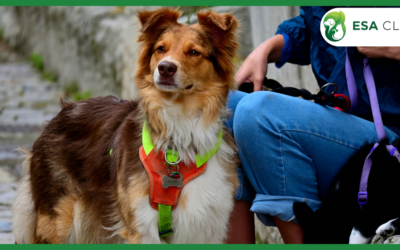

Dogs have rightfully earned themselves the title of being man’s best friend due to their loyalty, companionship, and patience. However, in recent years, there is a special kind of working dog that has extended their capabilities beyond those of the regular domestic pet – the comfort dogs. Trained specifically for this task, such animals can be found in various places, from hospitals to disaster zones, helping people who are experiencing the most difficult times in their lives and providing them with comfort and consolation. Such development represents the wider change in institutions’ attitude towards emotional well-being and the importance of actively creating an environment that promotes it in times of crisis. This is everything you need to know about comfort dogs – their history and their role.
1. What Are Comfort Dogs?
Comfort dogs are dogs that are introduced into certain locations, such as hospitals, schools, disaster response zones, or courtrooms, to give emotional support to people in challenging situations. They are similar to therapy dogs and emotional support animals in many aspects; however, there are some differences between all these terms that depend on each particular organization’s understanding of them. The main distinguishing characteristic of comfort dogs is not so much their legal status but their goal – to help people reduce their stress level and make them feel better, at least while working with them, in case of certain events.
Comfort dogs are usually chosen and trained specifically for this purpose. They are chosen because of their good temperament, ability to tolerate different types of surrounding noise, people, and crowds, as well as their ability to respond properly to the signals of the handler. This person reads not only the behavior of the animal but also the emotional condition of the people around. The presence of comfort dogs has become quite common after natural disasters and other mass casualty events because, according to research, interaction with a calm dog helps to reduce stress and lower people’s blood pressure in such situations.
2. The History of Comfort Dogs
However, the origins of dog-assisted comfort can be traced back to two individual stories which were combined together in the course of time. The first documented instance of the provision of such comfort through dogs goes back to World War II: a Yorkshire Terrier Smoky, who was discovered in a foxhole in New Guinea in 1944, was taken to the wounded soldiers by Corporal William Wynne during his recovery from an illness, and it turned out that she was so well-received that she was permitted to visit patients for several more years. Smoky is considered to be one of the first cases of a therapy animal in the military history of mankind.
The organized approach to the matter was introduced separately in the 1970s when an American nurse called Elaine Smith, who worked in England, saw how positively patients reacted to visits by a hospital chaplain’s Golden Retriever. This resulted in the creation of Therapy Dogs International in 1976 as the first-ever organization aimed at the training and registration of therapy dogs. Further development led to the involvement of hospitals, nursing homes, schools, disaster relief efforts, and to the evolution of this concept into the “comfort dog,” one that is now employed at crisis locations and courtrooms. Many other organizations of this kind were established in subsequent decades and created their own standards of training and certification of comfort dogs, which explains the wide variety of credentials of such animals depending on where they were trained.
3. How Do Comfort Dogs Work?
A comfort dog’s training involves teaching it to remain calm, nonreactive, and able to respond to human emotions without carrying out any physical tasks. A handler normally steers the dog towards people or groups of people in need of comfort, and the task of the dog becomes rather straightforward: nuzzle, lean, lie quietly, or simply be in a way that seems to offer comfort and understanding. Training the dog involves making it adaptive because the very same dog may have to offer comfort to a scared child in a hospital on one occasion, while on another, it may have to comfort a family devastated by an accident.
The handlers themselves are just as vital as the dogs themselves. An experienced handler understands how to detect the subtle changes in a dog’s body language – indications of the animal being stressed or tired – and knows when to bring a dog back for a rest instead of pushing on when things are tough. It is one of the qualities that distinguishes an effective comfort dog program from taking along a nice pet into a difficult situation.
4. The Benefits of Comfort Dogs
Scientific studies on human-dog interactions confirm that there is always an evident positive impact, such as decreased levels of stress hormones, lower blood pressure, and better mood, as a result of time spent with a calm and affectionate dog. In cases where a person suffers from chronic pain or PTSD and other psychological disorders, the presence of a comfort dog is useful for distracting oneself from negative experiences. Comfort dogs have also proved their worth in helping people to deal with their feelings of loneliness, as well as decreasing the level of anxiety and fear in children before medical interventions.
However, apart from these biological responses, there is a social component that needs to be highlighted as well. When people are placed in a social context, such as disaster shelters or in a courtroom, a comfort dog has a way of serving as a bridge between people because it allows people to connect socially in a non-stressful manner, even when faced with an isolating situation.
5. Who Can Benefit From Comfort Dogs?
Who can benefit from comfort dog visits? In brief, a wide variety of individuals and communities are in different situations. Individuals with anxiety, depression, or PTSD, patients undergoing treatment in hospitals or receiving medical procedures, individuals requiring end-of-life care services, children with autism spectrum disorders who need the soothing presence of an animal in their lives, communities experiencing natural disasters or tragic public events, and many others have been found to benefit from the visits of comfort dogs. Comfort dogs have also started to become part of everyday practice in schools, nursing homes, and rehabilitation centers, and are no longer reserved exclusively for emergencies.
One especially important area of application of comfort dogs includes courtrooms. Today, comfort dogs are being increasingly used to assist witnesses who are children or adults subjected to trauma. Some courts have even authorized a dog’s presence close to the witness stand during court hearings. First responders and other emergency personnel are yet another target audience for comfort dog programs – especially in the aftermath of major incidents, when the psychological impact experienced by those professionals becomes overwhelming.
6. Types of Comfort Dogs
“Comfort dog” is actually more of a broader designation and relates to several other designations in addition. Therapy dogs are specially trained to provide comfort at institutions such as hospitals or schools and receive certification through an official certification agency. Comfort dogs, on the other hand, have a specific purpose – helping an individual with certain psychological problems through the help of a letter from a licensed professional rather than special training. Service dogs are actually a separate class recognized by law, which provides them some protection under ADA (as animals that perform certain services), but they can still provide comfort in addition to that. Facility dogs work at a particular institution, such as a school or hospital, where they may participate in the process of counseling.
It is important to note that these classes differ significantly from the point of view of their legal status. Actually, only service dogs have a guaranteed right of access under federal law; all other classes of dogs are allowed in a particular place depending on the place’s own policy.
7. Training Comfort Dogs
The training process for a comfort dog is an early one, with the puppy learning how to deal with new experiences, sights, smells, sounds, and other people from an early age. It’s very important because if the animal is skittish or doesn’t handle stressful situations well, it won’t cope in places where it will be working. Further, the dog undergoes basic training – learn the command like sit, stay, and come. This is the safety training for work in public places. In the third stage, special attention is paid to the emotional reactions of the dog – how it copes with the stress, how it approaches a stressed person, whether it acts passively or aggressively. How much the dog understands its owner and listens to him.
Scenario-based training is another element used by many programs that exposes the dogs to similar situations they would have to deal with as a comfort dog – unexpected loud noises, crowded places, people crying or yelling, and equipment such as wheelchairs and medical devices that they might not be familiar with. The ones that are not able to cope with the situation are steered towards other activities since reliability during stressful situations is a must in this case. This assessment does not end once the dog is “certified.”
8. The Impact of Comfort Dogs on Mental Health
Apart from giving the individual an immediate feeling of comfort, several scientific studies have shown that such interactions result in physiological changes such as lower levels of stress hormones, regular breathing patterns, and lower blood pressure. It is the fact that dogs do not pass judgment on people that makes them so useful in such situations. People who face challenges in mental health usually experience feelings of isolation and being burdensome to others, and a dog provides a way to connect with someone without facing social barriers. Being involved in taking care of a comfort dog, even if that happens in a program format, allows one to get some routines, which are proven to be beneficial for mental well-being, especially for people lacking motivation.
One of the possible reasons suggested by some scientists is the secretion of oxytocin, or the “bonding hormone,” during positive interaction between a human and a dog. It should be noted that although comfort dogs cannot replace any kind of therapy, many therapists and counselors see their use as a great addition to mental well-being treatments.
9. Comfort Dogs in Hospitals and Nursing Homes
Comfort dogs have been introduced into hospitals as a means to assist ill children in coping with fear and pain and to provide cancer patients with emotional support during long cancer treatments, which require lots of physical effort. Comfort dogs also assist elderly people residing in nursing homes who suffer from depression, dementia, and Alzheimer’s disease. In both cases, scientific studies show that the introduction of comfort dogs leads to the decline of patients’ stress levels and blood pressure; in some cases, there are reports of a decrease in the need for pain medications during recovery.
In addition, some hospitals use facility dogs that live in the institution or come there regularly every week. As a result, patients can develop a special connection with the dog and not meet with a different one every time. Nowadays, staff well-being is becoming more and more important. Many nurses report that during their difficult days at work, a short meeting with a comfort dog can bring much-needed relaxation.
10. How to Get Involved With Comfort Dog Programs
For those who wish to become involved in such work, the starting point is conducting research into local institutions such as hospitals, nursing homes, schools, or community-based organizations that operate established comfort dog programs, as there are usually opportunities within these organizations to join a handler-dog volunteer team. The next step will likely involve an official selection process, such as background checks and a training or certification program, due to the nature of the population with whom these people work and the need to demonstrate commitment and professionalism. For individuals who have their dogs and are thinking of becoming involved, there are various organizations that provide certification services to determine whether a dog has a suitable temperament and training for this kind of work.
It may be useful to assess the actual temperament of one’s dog realistically instead of assuming things about its character, as not all friendly and obedient dogs are appropriate for working in the mentioned environment due to the nature of this work.
The Bottom Line
Comfort dogs sit in an unofficial middle ground between pets, therapy animals, and emotional support animals – defined not by a legal standard but by the incontrovertible fact that the presence of a relaxed dog can relieve pain. They are making a tangible difference, one visit after another, whether they are helping someone in the hospital, responding to a disaster, or assisting in court.
FAQs
1. Are comfort dogs the same as service dogs?
However, a comfort dog provides its owner with comfort only and is not trained to assist in performing any particular task. As such, service dogs have more legal protection in terms of access than comfort dogs since the latter do not fall within the definition of ADA as they lack task-specific training.
2. Do comfort dogs require formal certification?
It will depend upon the particular institution. Several hospitals, schools, and disaster relief efforts actually mandate that the dog be evaluated to ensure their temperament and training. It should be noted that, unlike the service animal situation, there is no universal requirement that is mandated by law. Some differences can be found between certification agencies, which may influence the decision to participate in such training.
3. What breeds make good comfort dogs?
No specific restricted breed list exists. The important factor will be the temperament of the dog. Dogs that are calm, friendly, and do not react negatively to new situations are often the type of dogs that excel at this job. Some specific breeds that have a calm and people-friendly temperament, such as golden retrievers and labradors, are often used.
4. Can children benefit from comfort dogs?
Yes, significantly. Comfort dogs are widely used in pediatric hospital units and with children managing autism or developmental disabilities, often helping reduce fear and anxiety around medical procedures or unfamiliar situations. Some schools have also introduced comfort dog visits during high-stress periods like exams, reporting noticeable improvements in student anxiety levels.
5. How is a comfort dog different from an emotional support animal?
An ESA dog is associated with the particular individual and his mental condition that can be evidenced in the letter from the psychiatrist, but the comfort dog works for a bigger group of people under particular institutions, or in case of crisis. Thus, comfort dogs and ESAs are regulated by different laws, and both of them operate independently of the ADA law regarding service animals.
6. How can I get my own dog involved in comfort dog work?
First of all, you can explore the possibilities at the local hospitals, schools, or other institutions that have programs for comfort dogs. In order to become a volunteer, you should make sure about the suitability of your dog for the job, and therefore, it is recommended to observe the existing handler-and-dog teams first.