

Emotional Support Animals (ESAs) are becoming more and more famous as people look for comfort and company to improve their mental health. The most popular ESAs are dogs, but cats can also be very helpful emotionally. ESAs don’t need special training like service animals do, but they do need paperwork from ESA Clinic. This guide shows you the steps you need to take to register your cat as an emotional support animal. It also talks about law issues and answers common questions.
Can Cats Help People Who Are Feeling Down?
Yes! Cats can be ESAs. Being around them can help people with anxiety, sadness, loneliness, and other mental health problems. Cats are independent, calm, and don’t need much care, so they’re perfect for people who don’t have the time or energy for more active pets.
In contrast to service animals, which are trained to do specific jobs, emotional support cats are there to be with you and make you feel better. Any pet cat that makes you feel better mentally could be considered.
How to Register Your Cat as an Emotional Support Animal
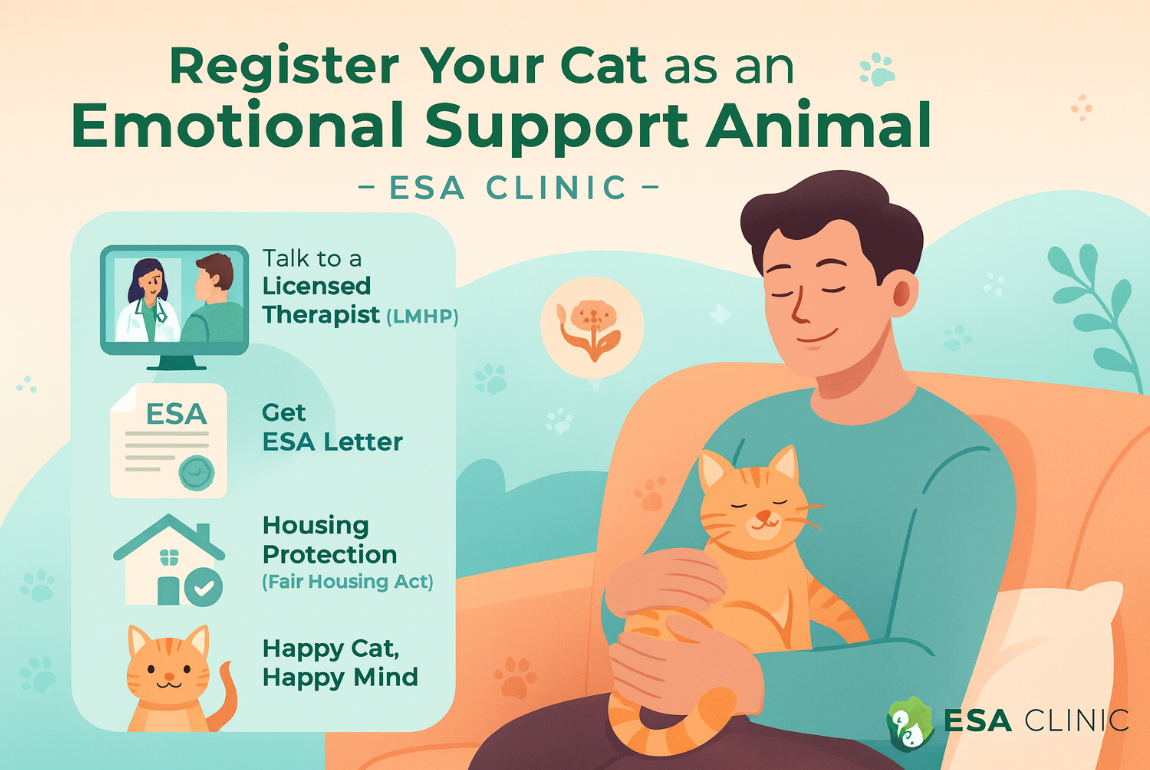
Step 1: Talk to a licensed mental health professional.
To register an ESA cat, the first thing you need to do is talk to a qualified mental health professional (LMHP), like a therapist, psychologist, or psychiatrist.
The LMHP will look at your mental health during your appointment and decide if having a cat can help your mental health. The LMHP will send an ESA letter if they think it is necessary. Your cat is officially an emotional support animal because of this letter.
Important Points:
- Licensed health care professionals, such as therapists, physicians and nurse practitioners, can write ESA letters.
- The letter must be on company paper, have the LMHP’s license number on it, be signed, and have the date written on it.
- The Fair Housing Act (FHA) says that the ESA letter is valid.
Step 2: Know What the Legal Consequences Are
State and local fair housing laws are now the main protection for ESAs; HUD withdrew its federal ESA guidance in April 2026. This law protects people with disabilities from housing abuse. However, if the property has a “no pets” policy, the landlord may still have to accommodate your cat under state or local law.
- It’s important to remember that the Americans with Disabilities Act (ADA) does not give ESAs the right to enter public places. In other words, they can’t go with you to shops, restaurants, or other public places.
- ESAs are no longer considered service animals by airlines, so if you want to fly with your cat, you may need to check the pet rules of each airline.
- It’s important to keep your cat friendly and under control, because owners can refuse to rent to you if the cat is a threat.
Step 3: Get your letter from ESA
You will get your ESA letter once the LMHP agrees that you need it. This document is needed to get a place to live and could also come in handy when working with roommates or landlords.
Here are some steps:
- Taking an online test to keep track of your mental health needs.
- You can talk to the LMHP by making an appointment or using Skype.
- To get the ESA letter, which is sent once the licensed clinician has completed the evaluation and approved it.
Step 4: Let Your Housing Provider Know
Give your owner or housing provider a copy of your ESA letter. As long as the ESA doesn’t pose a threat to other residents, some state laws bar extra pet fees for ESAs, but federal enforcement policy since May 2026 lets landlords charge standard pet fees or refuse to rent to people because of the animal.
It is suggested that you:
- Write to your owner and let them know.
- Update the ESA letter regularly, usually once a year.
- Take care of your cat and be good to it to avoid problems.
Step 5: Get Your Cat Ready
Even though ESAs don’t need special training, making sure your cat is well-behaved and at ease in your home is a good idea.
Tips for living with an emotional support cat:
- Make sure your pet has all of its shots and regular check-ups with the vet.
- You should pick a cat that is calm and friendly.
- Give them things to do, like toys, scratching posts, and nice places to stay.
- Think about a breed like the Ragdoll, Maine Coon, Russian Blue, American Shorthair, or Manx that is known for being friendly.
Step 6: Things that are Unique to Each State
There are more rules in some states about ESA letters. For instance, in California, Arkansas, Montana, Iowa, and Louisiana, a client-provider relationship must last for 30 days before an ESA letter can be issued.
Before you ask for an ESA letter, you should always check the rules in your area.
FAQS
1. Can cats be used as Emotional support animals?
Cats can be ESAs, yes. Being with them can help people with anxiety, sadness, and other mental health problems feel better.
2. How much does a cat that helps people feel better cost?
The price changes. Adoption fees at shelters can be between $50 and $200. Buying from a breeder, on the other hand, can range from a few hundred to a few thousand dollars, based on the breed.
3. Do ESA cats need to be trained?
There is no need for special training. The fact that your cat keeps you company is enough to make it an ESA.
4. Can I have more than one ESA cat?
Sure, you can have as many ESAs as you want as long as your home and ESA letter allow it.
5. Can I take my cat with me on a plane?
Most airlines no longer let you use an ESA to fly in the cabin. There may be rules about pets, or you may need to buy a different ticket for your cat.
6. How often do I need to get my ESA letter renewed?
Most of the time, ESA letters are good for one year. Some landlords might ask for a more current letter to keep the housing accommodations.
7. Does the government keep a list of all ESA cats?
No, websites that say they can register ESAs are not recognized by the law. The letter from the ESA Clinic about the ESA is the only proof that is valid.
8. What kinds of cats are good for calming people down?
Any cat that helps you feel better can be considered. Ragdolls, Maine Coons, Russian Blues, Manx, and American Shorthairs are all calm and friendly breeds that would make great pets.
Conclusion
Getting a real ESA letter from a licensed mental health worker like ESA Clinic is the most important part of registering your cat as an emotional support animal. There isn’t an official way to register or get certified. By doing these things, you can make sure that your cat gives you mental support and that you are protected legally in your home.
You can get a lot of mental health benefits from having a cat as a pet. You and your cat friend will do better together if you pick the right cat, know the legal requirements, and take good care of your ESA.