

A service dog vest is not just an accessory, but for some handlers, it is an effective device that will signal the working capabilities of their dogs at first sight. Although under the ADA, there are no specific clothing requirements for a service dog, the proper vest can simplify life, minimize unnecessary questions, and provide extra confidence to both the dog and its owner.
This guide is dedicated to answering your questions regarding vests, harnesses, and other training equipment for service dogs, covering the function and selection of those.
Do Service Dogs Need to Wear a Vest?
No. According to the Americans with Disabilities Act (ADA), there is no legal requirement for service animals to wear vests, harnesses, or other forms of identification. The legality of a service dog relies on the dog’s training and its ability to complete tasks related to mitigating its handler’s disability, not any vest or other clothing item it wears.
Most handlers still opt to use a vest, however. An easily identifiable vest eliminates two of the most prevalent public interactions associated with a working dog — attempts to pet the dog, and unnecessary inquiries from the staff. Business employees may only ask two things under the ADA: whether the dog is a service animal needed due to disability, and what task it is trained to complete.
What Does a Service Dog Vest Do?
The vest makes clear that a dog is a working animal, eliminating the need for conversation about this point from the public. The use of patches reading “Service Dog” or “Working Dog,” reflective striping, and bright colors all convey this information to the public in such a way that the handler and dog are left undisturbed.
Types of Service Dog Vests
There are various kinds of vests designed for different purposes, climates, and training stages:
- Mesh vests – light and comfortable, perfect for hot weather or untrained dogs.
- Harness-style padded vests – designed for everyday use, with the top handle and many attachment points to help the dog move around.
- Reflective vests – contain reflective strips for better visibility in the dark or in crowded places.
- Tactical vests – contain MOLLE straps used to attach additional equipment and are usually worn by dogs that perform certain jobs.
- Cooling vests – utilize an evaporative cooling system for dogs that work outside for long periods.
- Training vests – light and adjustable vests marked “In Training.”
How to Choose the Right One
The choice of the vest should consider the dog’s size and fit, the weather conditions where the dog works, the type of tasks the dog has to carry out, and the vest’s ease of wearing. For instance, a dog assisting a person with mobility challenges must have a strong handle, while a search-and-rescue dog must be able to attach equipment. A dog working in warm climatic conditions must have a vest that is either mesh-like or one that cools the dog.
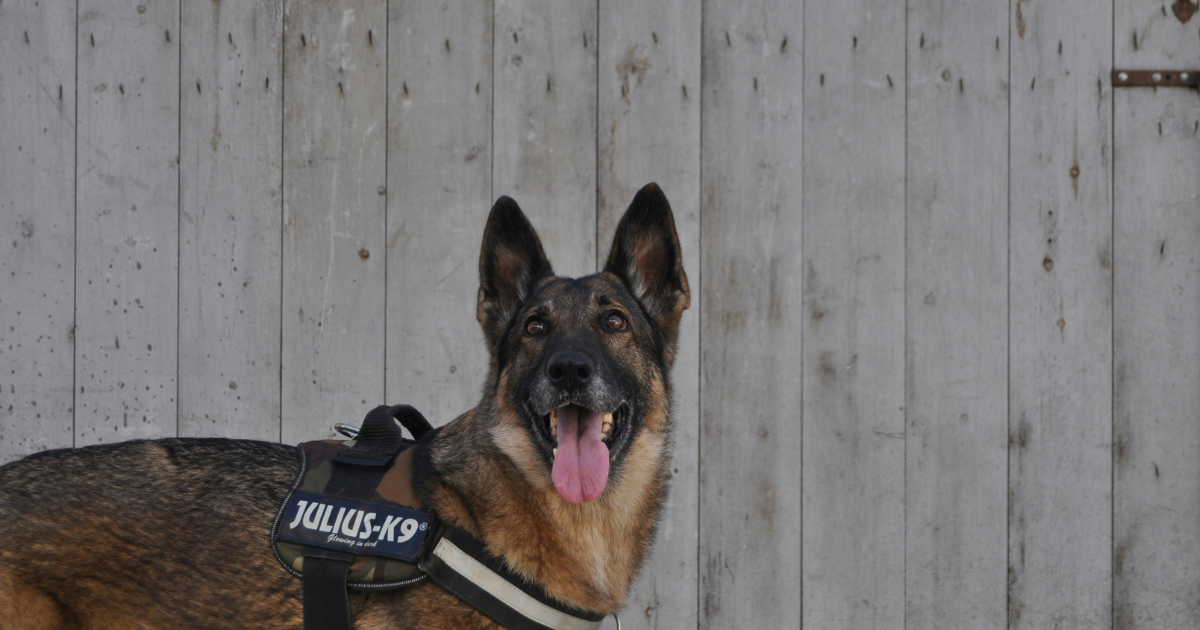
The Best Vest for a Psychiatric Service Dog
Psychiatric service dogs assist their owners who suffer from illnesses such as PTSD, panic disorders, and anxiety, among others. The dogs achieve this in different ways, such as stopping a panic attack, grounding the owner during a dissociative experience, or alerting him/her to take his/her medication. This means that choosing the right vest is crucial.
A good PSD vest typically includes:
- Pockets for medication, medical alert cards, or emergency information
- A clearly labeled “Psychiatric Service Dog” patch
- A “Do Not Pet” patch to protect the dog’s focus
- A sturdy top handle for guiding the dog through crowded or high-stimulation spaces
- Breathable materials suited for long daily wear
Velcro patch panels are especially useful here, since they let handlers swap labeling depending on the situation – a standard patch for everyday errands, and something like “Working Dog – Do Not Disturb” for busier environments like airports.
Service Dog in Training Vests
A dog in a training vest is learning its tasks and is yet to be certified. In most cases, such vests have the inscription “In Training” or “Service Dog In Training,” which informs everyone that they should leave the dog alone, an important thing since disruptions can greatly delay the dog’s training process.
Vests for dogs that are still in training programs are generally lighter and easily adjustable as compared to those of certified dogs because most training programs begin with puppies that will grow and develop a lot over the next few months. On the other hand, certified dog vests are made for everyday use and are designed to withstand wear-and-tear and heavy loads, with load-bearing handles and even MOLLE webbing or D-rings. It is also important to mention that a dog in training in some states may have some degree of public access rights.
Key Features to Look For
- Handles. A top handle that will help with mobility and guidance is a must-have. Choose handles that are built into the harness.
- Pockets. Zippered or Velcro pockets will allow a handler to keep medications, identification, or medical alert cards in his/her hands and will not require carrying an additional bag. This is a minor detail that brings many conveniences in daily life.
- Patches. Popular patches are “Service Dog,” “Do Not Pet,” “Working Dog,” “In Training,” “Psychiatric Service Dog,” “Medical Alert Dog,” and “Mobility Assistance Dog.” Velcro panels will allow you to change patches according to circumstances. High-contrast, fade-proof, and appropriately sized lettering is very important.
- Materials. A breathable mesh is perfect when it comes to hot weather; durable nylon is resistant to water and long-lasting; and soft cotton will be perfect for dogs with skin sensitivity.
- Color. There is no rule regarding the color of the vest. The most common colors are red and blue, which provide good visibility; black gives a more elegant appearance – no matter which one you choose, nothing changes the legality of your dog.
- Proper fitting and maintenance. A well-fitted vest should be tight, but not constricting enough so that two fingers should easily fit between the strap and your dog’s body. Most vests are machine-safe, though some may require only spot cleaning or hand washing because of padding, Velcro, and reflective material.
Real Service Dog Vest vs. Fake
The distinction between a legitimate service dog vest and a fake one has very little to do with the vest; it all depends on the dog wearing the vest. The former is used by a dog that has been trained legitimately and performs duties that alleviate its handler’s disabilities. On the other hand, a fake service dog vest is worn by an untrained pet so that the owner doesn’t have to pay the fees required for taking a pet into certain establishments.
This is more important than you might think.
Signs of a legitimately trained service dog:
- Calm, focused, and attentive to its handler in public
- Ignores food, people, and other animals without redirection
- Performs a clear, observable task connected to the handler’s disability
Red flags of a fake service dog:
- Reactive, pulling on the leash, or behaving like an untrained pet
- Handler can’t describe what task the dog performs
- A vest labeled “Registered Service Dog” – there is no official ADA service dog registry, and this phrasing is a common sign of a fraudulent certification company
Since anyone can legally buy a service dog vest online with no verification required, the vest itself is never proof of legitimacy – only the dog’s training and behavior are.
The Purpose of an Emotional Support Dog Vest
The emotional support dog vest is used to label an animal as an Emotional Support Animal rather than a service dog. In contrast to the latter, an ESA does not require special training to assist its handler with particular disability-related tasks; hence, the ESA vest does not guarantee rights to enter public places according to the ADA law. However, an ESA vest may be quite useful in day-to-day life, especially when it comes to housing protected by the Fair Housing Act, as the use of an ESA vest helps avoid misunderstandings and saves time that otherwise would be spent on explaining one’s situation again and again.
One should bear in mind that a vest is not the same as documentation. The landlords and airlines that are familiar with ESA regulations usually ask their tenants or passengers to provide a valid ESA letter issued by a licensed therapist or psychiatrist, rather than a vest or any online “registration” of an animal. If you are thinking about using an emotional support animal and want your ESA letter to be written correctly, ESA Clinic provides an opportunity to do so.
Frequently Asked Questions
Do service dogs need to wear a vest?
No. The ADA doesn’t require any identification for service dogs. Many handlers use one anyway to reduce public questions and unwanted interactions, but a vest alone doesn’t make a dog a service animal — training and task performance do.
What’s the best vest for a psychiatric service dog?
Look for pockets for medication or alert cards, a “Psychiatric Service Dog” patch, a “Do Not Pet” label, a sturdy top handle, and breathable material for long wear. Velcro panels let you swap patches depending on the setting.
How can I tell if a service dog vest is real or fake?
It comes down to the dog, not the vest. A legitimately trained dog is calm, focused, and performs an observable task. Red flags include a reactive dog, a handler who can’t describe the dog’s task, or a vest labeled “Registered Service Dog,” since no official ADA registry exists.
What’s the difference between an ESA vest and a service dog vest?
The vest for a service dog means ADA public access that is associated with training and performing tasks. The ESA vest denotes the animal’s status as an emotional support animal and protects under the Fair Housing Act – but not general public access.
Can anyone buy a service dog vest?
Yes. Vests are available for purchase without verification of any sort; that is why a vest alone cannot confirm the status of a dog, because there should be proper training and behavior.
Do I need an ESA letter if my dog already wears an ESA vest?
Yes. A vest serves as a visual sign and doesn’t have legal significance. People who recognize the rights of an ESA will ask you for the letter from a licensed mental health professional that you can obtain at ESA Clinic.