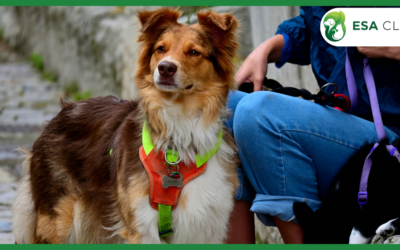

“Service dog ADA registration” is what most people use in their Google search. However, such an idea is misleading since there is no such thing as “registration.” The ADA does not have a database where registered service dogs are listed. However, some services, such as USA Service Dog Registration, provide you with a free number.
Where Are Service Dogs Actually Allowed?
According to the ADA, public accommodations such as government facilities, places of business, and nonprofits must allow service dogs to enter areas accessible to the public. There are reasonable restrictions on this right; while the service animal can accompany the handler into a hospital waiting room, it cannot enter an operating room. In a similar vein, it is permitted to be in the restaurant dining hall but not in the kitchen. Traveling by air is regulated separately by the Air Carrier Access Act, which permits the flying of a service dog with its handler.
What Actually Makes a Dog a “Service Dog”
A dog becomes a service dog when it gets trained to perform a particular task associated with a handler’s disability; the registration of the service dog isn’t necessary here. Guide dogs are one of the best-known examples of service dogs, and there are also service dogs that help their owners with mobility problems, seizures, mental disorders, and blood sugar drop detection.
The Bigger Picture
While some pet owners may opt to use devices such as vests or tags simply for convenience in public, the choice is a personal one as opposed to a legal one. Where emotional support animals are concerned, however, true protection can only be achieved through an ESA letter from a licensed mental health practitioner.
FAQs:
1. Does the ADA require service dog registration?
No. There is no registration process for service animals under the ADA. This was an intentional decision on the part of legislators to ensure that the process remained simple and did not involve any red tape or paperwork for the handler.
2. Can a business ask for my service dog’s registration number?
No. The staff can inquire whether the animal is required for disability and what task the dog performs. However, they are not allowed to ask for any identification, certificates, or documents proving that you have trained the animal and performed a specific task. In case you are asked to provide a registration, it exceeds the ADA standards.
3. Are service dogs allowed everywhere in public?
Yes, mostly, except for some rare cases like operating rooms and places where hygiene must be guaranteed. Zoo parks may impose restrictions when the presence of the animal might scare other animals. But aside from this small number of exceptions, access is permitted in any place the general public has access to.
4. Can I fly with my service dog?
Yes, according to the Air Carrier Access Act. It would be better if you make sure about your airline’s requirements for documents proving that your animal is trained. Airlines have the right to require a DOT document confirming the training of the animal and its behavior.
5. What actually qualifies a dog as a service dog?
Training of an individual for performing some specific tasks associated with the disabilities, not registering, certifying, or using equipment. Such tasks might include assisting visually impaired people, providing alerts for medical situations, and disrupting anxious behavior. The breed, size, and appearance of a dog do not matter for its qualification as a service dog.
6. Is an ESA covered under the same ADA rules as a service dog?
No. ESAs are covered by the Fair Housing Act, rather than by the ADA. In addition, ESA needs to have an ESA letter rather than being registered. It is important to mention that ESA does not need any training for task performance since its function is to provide comfort through companionship.