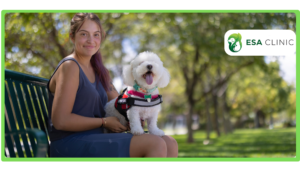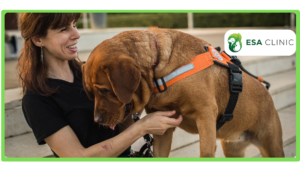
Anxiety, PTSD, panic attacks, and depression are some of the mental illnesses that make living a difficult life. A PSD is not just a pet. It is a highly trained dog that helps a person to overcome a mental health disability through undertaking trained tasks. As a result, the handler can relax, feel safer, and become more comfortable. The blog will describe what a psychiatric service dog is, who needs them, and how to train a Psychiatric Service Dog (PSD).
What Is a Psychiatric Service Dog?
These dogs perform trained behaviors that help people with mental illnesses and help them to survive daily life more easily.
PSD vs ESA vs Therapy Dog
Many people have confusion between these three types of support animals, but they are different.
1. Psychiatric Service Dog
- A PSD is trained to perform specific tasks.
- These tasks help with a disability.
- PSDs have public access rights in many places if they are properly trained and well-behaved.
2. Emotional Support Animal
- An ESA provides comfort just by being present.
- ESAs do not need special task training.
- ESAs are not allowed everywhere in public like service dogs.
3. Therapy Dog
- Therapy dogs also serve other individuals, not just their owners.
- They can visit hospitals, schools, and nursing homes.
- They are not service dogs
Why are they legally different?
PSDs are legally different because they are task-trained dogs. This means the dog is trained to do a job directly related to the person’s disability, not only provide comfort.
Who Can Benefit from a PSD?
A psychiatric service dog may help persons who struggle to cope with their everyday lives due to mental health problems.
PSDs help with these problems:
- Anxiety: Cuts stress and enhances the feeling of relaxation.
- PTSD: It offers assistance when there is fear or flashbacks.
- Panic attacks: Assists as soon as the panic attack occurs.
- Depression: Helps in building a proper schedule and improves well-being.
Qualities of a Good PSD
Not every dog can become a psychiatric service dog. A PSD must stay calm in public and handle stressful situations without fear or aggression.
A good PSD should have:
- Calm and stable temperament
- Friendly behavior without being overly excited
- Good focus and willingness to learn
- No strong reaction to noise, crowds, or other animals
- Good health and fitness
PSD Training Process
Training a psychiatric service dog takes time and patience. Most dogs need months of training before they become reliable.
Start With Basic Obedience
Before teaching service tasks, your dog must learn basic obedience. These commands help you control the dog in every situation.
Important commands include:
- Sit
- Stay
- Come
- Down
- Heel
Basic obedience is the foundation because a PSD must listen even when there are distractions. Practice daily in short sessions and reward your dog when they do it correctly.
Socialization Training
Socialization helps your dog feel confident in different environments.
Your dog should slowly get used to:
- Crowds and new people
- Traffic sounds
- Different floors and surfaces
- Shopping areas and open spaces
- Calm behavior around other animals
Start slowly. If your dog becomes nervous, do not force. Move to a calmer area and try again later. Reward calm behavior.
Public Access Training
Public access training teaches your dog to behave properly in public places.
A PSD should learn:
- Loose leash walking: Walking by your side without pulling.
- Ignoring strangers: The importance of staying focused despite people chatting and touching the dog.
- No barking or jumping: Keeping a service dog calm and in control.
- Calm Conduct in Bustling Areas: Resting and Conduct in a Polite Manner.
Teach Psychiatric Service Tasks
This is the most important part. A PSD must learn tasks that support your mental health needs.
Common PSD tasks include:
- Deep Pressure Therapy
- Interrupting Anxiety Behaviors
- Nightmare Interruption
- Medication Reminders
- Grounding and Alert Response
Proofing Training in Real-Life Situations
Proofing means teaching your dog to perform tasks in different places, not only at home.
Practice tasks in:
- A quiet park
- A calm street
- Public places with mild distractions
- Busier places over time
A trained PSD should respond reliably even when distractions are present.
Mistakes to avoid during the training of a PSD
- Lacking socialization: This may give rise to fear or being reactive in society.
- Home training only: Dogs can act well at home, but in a new environment, they can fail.
- Inconsistent use of commands: Use the same words every time so that they are not mixed up.
- Expecting fast results: PSD training takes time and steady practice.
How Long Does PSD Training Take?
The majority of psychiatric service dogs require 6 months to 18 months of training. Some dogs may learn faster, while others need more time.
Training time depends on:
- The dog’s temperament
- Daily practice routine
- Difficulty of tasks
- Public behavior and focus
- Support from trainers
Can You Train a PSD by Yourself?
Yes, you can train a PSD yourself if you are consistent, patient, and willing to guide.
Self-training is good if:
- Your dog is calm and easy to handle
- You can practice every day
- You know basic training methods
Professional training is helpful if:
- Your dog has behavior problems
- You need advanced task training
- You want faster progress and better reliability
Even if you train on your own, working with a trainer can improve results.
Tips for Successful PSD Training
- Keep sessions short, 10 to 15 minutes
- Use reward-based training
- Practice daily
- Stay calm and patient
- Build trust and bonding with your dog
- Increase difficulty slowly
A strong bond between you and your dog makes service work more reliable.
Conclusion
The training of a psychiatric service dog is not an easy task; it requires daily patience and practice. A well-trained PSD can be highly useful in dealing with anxiety issues and panic attacks by performing some specific tasks. Above all, you must train the dog to do what you want and what you find helpful in dealing with your disability. With proper training and practice, it is possible that PSD can turn out to be a good friend who could give you a feeling of being more secure in life.