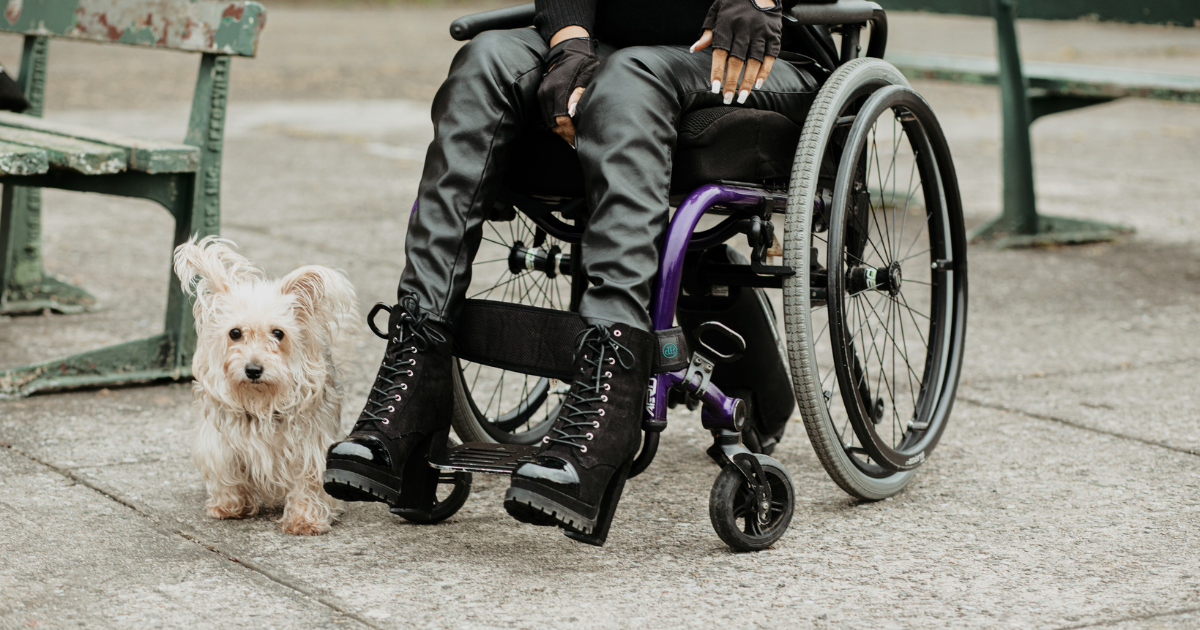
Disabilities have an effect on how a person is able to interact with the world around them, and sometimes this is not the same world that was made with their needs in mind. For a lot of people who are disabled, the use of an emotional support animal (ESA) has proved to be really helpful in terms of giving them companionship.
In case you are wondering whether you are eligible for an ESA or not, the following information will prove to be useful for you.
What Counts as a Disability for ESA Purposes?
According to Fair Housing Act (FHA), disability can be described as a physical or mental impairment that significantly limits one or more of a person’s major life activities. That list of potential impairments is very wide and can include:
- Various forms of mental illness, including anxiety, depression, PTSD, bipolar disorder, and OCD
- Autism and ADHD
- Any form of chronic physical conditions that also have strong emotional or psychological component, such as chronic pain, autoimmune disorders, or conditions limiting mobility
- Intellectual disabilities that limit a person’s ability to function
The key thing here is that ESA usually relates to emotional or therapeutic support provided by the animal and not its assistance with physical activity. In other words, even if your principal disability is physical in nature, ESA can be still relevant if you need to handle some emotions associated with having such a problem, like loneliness, anxiety, or grief associated with such diagnosis.
Does My Specific Disability Qualify?
There is no set list of eligible disabilities recognized by law. What happens is your provider will assess your personal case and find out if:
- You have a disability which is limiting your ability to perform a major life activity, and
- The use of an emotional support animal is a benefit for your disability.
In general, both factors should be met to issue a valid ESA letter. This is why it is important how you will be assessed, not if you have one of the listed disabilities.
Step-by-Step: How to Get an ESA Letter as a Disabled Individual
1. Reflect on How Your Disability Affects Daily Life
Before the evaluation process, try to assess the extent to which your disability manifests itself either physically or psychologically and how the animal assists or can assist you with managing it. This can range from relieving anxiety caused by a medical condition to providing structure when dealing with unpredictable symptoms. It will help a lot for your provider to be able to get a clear picture of your situation.

2. Consult a Licensed Mental Health Professional
An evaluation is usually performed by an LMHP such as a counselor, psychologist, psychiatrist or a clinical social worker. It’s important that you get evaluated regardless of whether your disability is physical. The fact is that ESA letter is always issued because of the therapeutic effect and benefits rather than physical help.
3. Complete a Genuine Clinical Evaluation
Legitimate evaluations entail having an actual discussion regarding the details of your disability, how your disability impacts you, and if an ESA is a viable option in dealing with it. Be wary of services that provide you an automatic green light without doing an actual evaluation; a letter from them is much more likely to be invalid.
4. Receive Your ESA Letter
If approved, you’ll receive a signed letter on official letterhead that includes:
- The provider’s name, license number, and state of licensure
- A statement confirming you have a qualifying disability that substantially limits a major life activity
- Verification that an emotional support animal is a necessary part of your treatment or support plan
- The date of issue, ideally within the past year
- The provider’s signature and contact information
5. Present Your Letter to Your Housing Provider
Once issued, you can submit your ESA letter to your landlord or property manager to request a reasonable accommodation, even in housing with a no-pet policy. Landlords can request this documentation but cannot demand your full diagnosis or detailed medical records.
ESA vs. Service Animal: Which Do You Actually Need?
- This is one of the major distinctions that should be made by people with disabilities, as the correct choice will depend greatly on your needs:
ESA is a source of comfort and emotional support provided solely due to its presence, and it does not require any training at all. The laws regarding ESAs protect their rights primarily in the context of housing (according to the FHA). - Service animals (dogs, and sometimes miniature horses) receive individual training which allows them to perform certain tasks related to your disability, such as leading blind people, alerting about the medical issues, or assisting with mobility. Service animals are covered by the ADA, and they have a wider range of rights to enter places like restaurants, stores, etc.
If you require physical assistance in terms of guiding, fetching something for you, or alerting about the issue of your health condition, a trained service animal can be the better choice, although the process of training is significantly more complicated than in case of ESAs.
Where Your ESA Letter Actually Applies
- Housing (Fair Housing Act): Your strongest protections are in the area of housing. Landlords must usually comply with the presence of an ESA without any pet fees, deposits, or breed or size restrictions.
- Air Travel: Airlines are no longer obligated to accommodate ESAs in accordance with the Air Carrier Access Act. Airlines now treat ESAs as ordinary pets with corresponding pet fees.
- Public Places (restaurants, shops, etc.): ESAs do not have the same legal protections for accessing public places as service dogs do under the ADA. ESAs might be welcome in certain places as a courtesy but aren’t legally entitled to be present there.
A note about 2026 changes in the federal housing regulations: In May 2026, HUD amended their federal enforcement policy regarding untrained ESAs. HUD will not take action on federal housing complaints related to ESAs unless that particular animal has been individually trained to perform a specific task. Fair Housing Act itself hasn’t changed, and state-level ESA housing protections are also still in effect.
Choosing the Right Animal for Your Situation
It is impossible to suggest the best ESA for every disabled person since the choice largely depends on the way of living and energy of a person. In case there are some restrictions concerning movements and energy, it would be more reasonable to choose cats or other low maintenance animals instead of dogs which require walking every day. At the same time, if there is a need to have a routine or perform physical exercises in order to cope with disability, having a dog can be a good idea.
Start Your ESA Evaluation With ESA Clinic
Acquiring an ESA letter requires starting off by undergoing a proper evaluation that will consider the entire situation that you are in, rather than a standardized test done online. The experts at ESA Clinic will work with you and will help in making sure that the letter issued to you is credible, since it will be prepared after considering your personal circumstances.
Are you interested in seeing if an ESA can help you with your problems? You should go through an evaluation at ESA Clinic now!
Frequently Asked Questions
1. Do I need a mental health diagnosis to get an ESA if my disability is physical?
Generally, yes. ESA letters are typically issued based on emotional or psychological therapeutic benefit, so a licensed mental health professional evaluates how the animal supports you emotionally, even if your primary disability is physical.
2. What’s the difference between an ESA and a service animal for disabled individuals?
An ESA offers comfort through its presence with no training required, mainly protected in housing. A service animal is trained for specific tasks and has broader public access rights under the ADA.
3. Can I have both a service animal and an ESA?
In some cases, yes, though most people only need one or the other depending on whether they require trained task assistance, emotional support, or both.
4. Will my ESA be allowed on flights if I’m disabled?
This is not always the case. The airlines are not obligated anymore to make provision for ESAs according to the Air Carrier Access Act, and hence, most airlines now classify ESAs as normal pets and charge pet fees.
5. Can a landlord deny my ESA if I have a disability?
Generally, no. This applies only if you have your ESA letter. It is the responsibility of the landlord to consider an ESA as a reasonable accommodation despite being under a no-pet policy.
6. Does my ESA need any special training to help with my disability?
No. Emotional support animals don’t require specific training the way service animals do; their role is providing comfort and companionship through their presence.