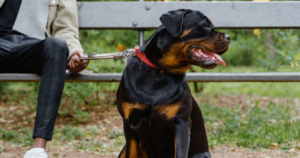
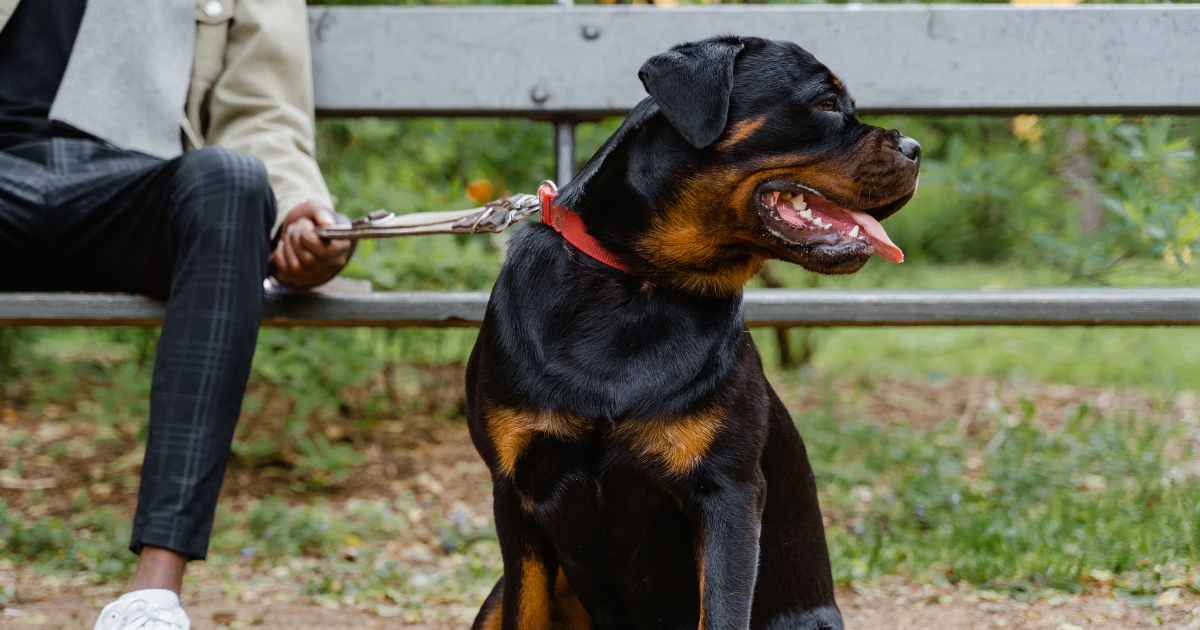
One should not ignore that there are misconceptions about Rottweilers that precede the name and suggest something about their character, which is not entirely true. An experienced Rottweiler will be loyal, smart, and extremely obedient, which means that Rottweilers are easy to train if one knows the motives behind the dog’s behavior.
Below, one can find a comprehensive guide on how to train a Rottweiler.
Understanding a Rottweiler’s Natural Temperament
Historically bred as guard dogs and working dogs, Rottweilers still exhibit a number of instinctive traits which stem from their past. Namely, these dogs have a natural tendency to be afraid of strangers and strange dogs, be highly territorial, and to mouth and nip at everything, including when playing.
It should be noted that much of the aggressive behavior shown by Rottweilers is based on fear and anxiety rather than actual hostility. The distinction should be made due to the fact that it influences the way socialization of Rottweilers should take place: a dog that is confident and well-led will be much more relaxed and socialized than one left alone with his/her fears and lack of experience.
Are Rottweilers Actually Easy to Train?
Though they may be a rough bunch at times, Rottweilers are quick studies, in actuality. Being naturally obedient and responsive to good leadership, they are excellent trainees in any type of environment and especially in structured training settings.
When Should You Start Training a Rottweiler?
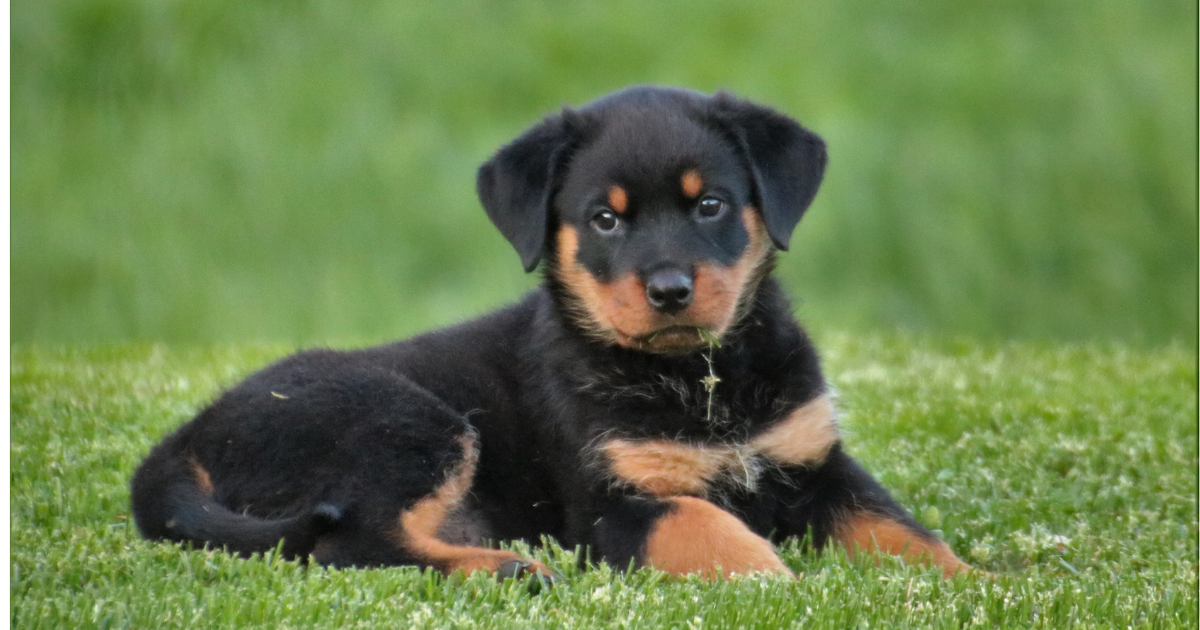
The earlier the better. At about 8 to 10 weeks, your Rottie puppy enters his fear imprinting stage, and the sooner you get through that phase successfully, the better your chances of raising a puppy who will remain calm under novel situations in the future. In general, by 7 weeks old, a puppy should be ready to move into his new home, provided he is neurologically ready. However, the early training is normally done by breeders prior to that.
Note that at such an age, the puppy is not very able to concentrate on anything for a longer period, so you need to have patience. Between 11 and 16 weeks is especially important from a socialization perspective because the puppy is learning not to see new people and other animals as threats.
What Training Approach Works Best?
The best way to train Rottweilers is through the method of operant conditioning, which consists of four methods: positive reinforcement, negative reinforcement, positive punishment, and negative punishment. Of those, the method of positive reinforcement will be the main one used by you from the start.
Positive reinforcement is a technique where you give rewards for actions you desire to repeat in your dog, in the form of treats, toys, or praise immediately after a good action is performed. The timing is important here because dogs learn best when you reward them within two seconds after the action is performed. If you are late or give a reward at the wrong time, your dog can learn the wrong thing.
Even though Rottweilers can be trained with some authority, they don’t like being yelled at or corrected physically, which usually creates more fear and resistance than obedience.
Building Real Obedience
Here are three tips that can do wonders with the breed:
- Consistency: Inconsistencies in reaction to the same action, where you allow a certain behavior today but correct it the very next day, confuse the dog and lead nowhere.
- Confidence: Rottweilers are very much in tune with their leaders. If you appear to be weak or unsure, there is little chance that your Rottweiler will respect you.
- Commands: Keep your commands short and clear, i.e., a simple word or phrase in a steady and calm voice will make more sense than a lengthy command.
Managing Nipping and Growling
It is normal for puppies to mouth and nip in general, but this tendency is heightened in Rottweilers, together with growling when they are surprised or afraid of people or dogs they do not know. It is helpful to discipline your puppy on the leash in this case; if he or she begins misbehaving, give him a time-out. It is better to exclude other possible reasons at first, such as hunger, discomfort, and fear, rather than immediately start correcting this behavior.
Managing Food Motivation
One of the best-known features about Rottweilers is their great appetite, and it is not unusual at all for people who do everything perfectly and still have an overweight dog. The reason for that is their metabolism and their perseverance in seeking food. Low-calorie treats help to reward your pet abundantly while training and do not cause obesity, which is especially important for Rottweiler training sessions, which usually last longer than those of other dogs.
Socializing a Rottweiler
The process of socialization is performed in the same way as it is with other dogs; however, it needs to be done with more patience and more carefully. A well-socialized Rottweiler will be as amicable in society as other dogs.
A few things that help:
- Keep early outings on a firm leash, and don’t hesitate to remove your puppy from a situation quickly if it starts to go poorly.
- Prioritize positive experiences with new people and dogs, since Rottweiler wariness is rooted mostly in fear rather than aggression; positive early exposure directly counters that instinct.
- Arrange calm, friendly playdates, with both children and confident, well-socialized adult dogs, so your Rottweiler has consistent, low-stress opportunities to build comfort around others.
The First Two Weeks at Home
Once your Rottweiler comes home during that early 8-to-10-week window, a few priorities matter most:
Basic Manners
Begin with practical basic objectives such as lying down upon command, not begging for food, coming to say hello to guests without barking or growling, and being attentive when called. This is something that will take time; your puppy won’t learn everything in one day.
Grooming and Nail Care
Although Rottweilers don’t usually mind being groomed compared to other breeds, you must ensure that this practice begins right away; otherwise, the dog’s size and strength might make it difficult. Try to groom your puppy around twice a week during the first couple of months while using treats for encouragement. As for bathing, this should be done no more than once per month.
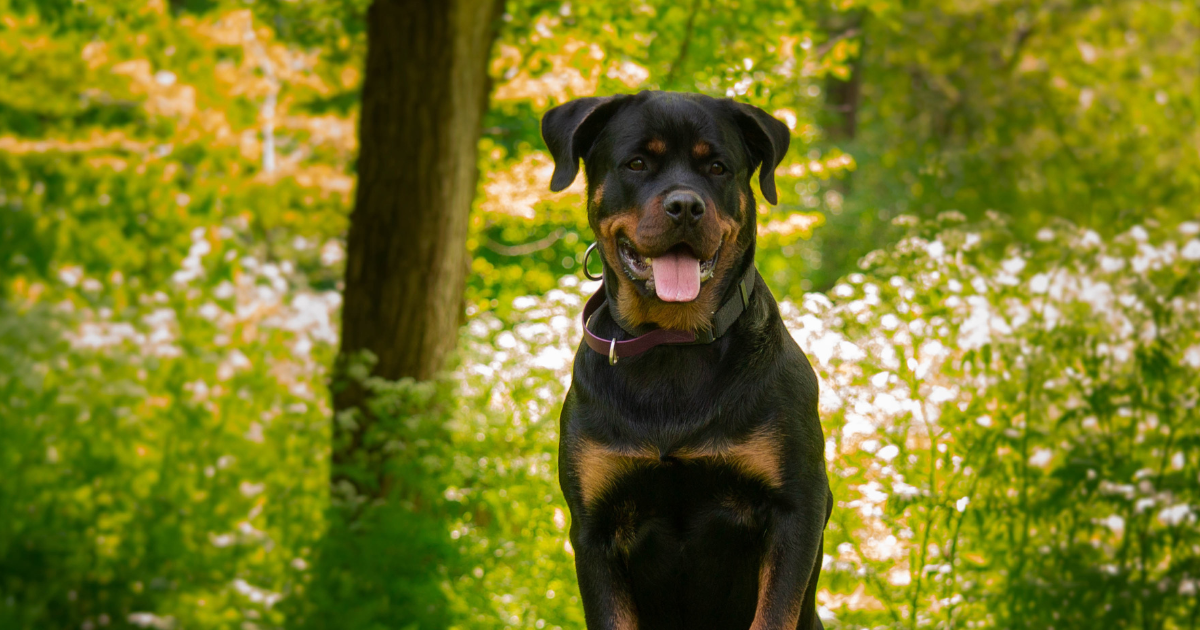
Core Commands Worth Teaching Early
Rottweilers belong to the breeds that can be easily taught to obey orders, and it has to do with their intelligent nature and loyalty. However, limit training sessions to five minutes, because the attention span of any dog can be quite limited.
- Sit. The basic command. Use hand gestures and a calm, commanding tone of voice.
- Paw. After mastering the first command, place your hand in front of the dog – many dogs naturally make the gesture, or else you may gently guide their paw to your hand.
- No / Off. A critical command, used exclusively for punishing undesirable behavior, but not as a routine command. Here, tone of voice is more important than volume.
- Down. Gesture to the ground with your hand and only then give the reward. It usually takes several lessons to master this command.
- Stay. It can be difficult for Rottweilers to learn how to stay, because it is against their nature. A calm tone of voice and hand gestures will help you out.
- Come. One of the easiest commands, because coming back to its owner is a natural thing. Reward the dog only after it came all the way back.
A Note on Advanced or Protection-Style Training
Due to the physical size, power, and instinct for protection that Rottweilers have, there is an instance where certain Rottweiler owners opt for protection training that is more sophisticated in nature. Protection training such as this can have serious safety concerns and liability issues, and it should be handled by an expert trainer as opposed to being done individually. Most households just need a Rottweiler that is properly socialized and obedient.
Rottweilers as Emotional Support or Service Animals
The qualities of a Rottweiler, which include its intelligence, loyalty, and confidence when correctly socialized, can make the dog an ideal emotional support and, in some cases, a psychiatric service animal. If you have an interest in Rottweiler dogs because you need a dog that will help you cope with your psychological or emotional problems, it is important for you to learn about the differences between the two legal definitions.
While there is no specific training required for an ESA, it is essential that you have an ESA letter issued by a licensed mental health care provider that will document your disability. On the other hand, a psychiatric service dog is a task-trained assistance dog and comes with more public access privileges according to the ADA.
In case your Rottweiler is meant only for providing comfort and company but not for performing tasks related to your disability, then you need an ESA letter. ESA Clinic can provide you with ESA letters through licensed mental health care providers.
Your Rottweiler Is Ready for a Well-Trained Life
Rottweiler training is, in many ways, not as complex as one might think. Indeed, they can be headstrong and highly protective, but at the same time, Rottweilers are extremely loyal, intelligent, and keen to respond to a firm and consistent approach. Socialize and train from an early age, and you will have a lifetime partner that will be well-mannered and devoted.
And if this partner is already helping you cope emotionally, then begin your ESA evaluation with ESA Clinic and make sure your housing rights are as solid as your partnership.
Frequently Asked Questions
1. At what age should I start training a Rottweiler puppy?
Around 8 to 10 weeks is ideal, since this falls within the breed’s key fear-imprinting and socialization window, though basic training can begin as early as 7 weeks once a puppy is neurologically ready.
2. Are Rottweilers actually aggressive by nature?
Not inherently. Much of what looks like aggression is rooted in fear or territorial instinct rather than hostility, and thorough, patient socialization significantly reduces defensive or wary behavior.
3. What’s the best training method for a Rottweiler?
Positive reinforcement, rewarding desired behavior with treats, toys, or praise, is the most effective foundation, especially early on, paired with calm, confident, and consistent leadership.
4. How do I stop my Rottweiler puppy from nipping or growling?
Maintain consistent training in relation to the leash and the use of time-outs, but exclude other possible factors, such as hunger, pain, or fear, before determining whether the issue is a behavioral one.
5. Can a Rottweiler be an emotional support animal?
Yes, Rottweilers can also be emotional support animals like other breeds, provided that they have a legal ESA letter from a licensed mental health provider, without the need for any training.
6. How long does it take to fully train a Rottweiler?
There is no set period of time, but with regular and short training sessions daily from a young age, most Rottweilers become well trained within a few months.